• Classes
    • ACADEMY CLASSES
    • WSET L1 BEER
    • WSET L1 SAKE
    • WSET L1 WINE
    • WSET L2 WINE
    • WSET L3 WINE
    • WSET L1 SPIRITS
    • WSET L2 SPIRITS
    • LEVEL 3 SPIRITS
  • Shop
  • Resources
    • STUDY RESOURCES >
      • FLASH CARDS FOR STUDY
      • Video Library
      • Wine Vocabulary
    • STAFF TRAINING RESOURCES
    • BEVERAGE PROGRAM MANAGEMENT
    • WSET Wine Suggestions
    • Our Library >
      • Wine Books
      • Viti / Vini
      • SPIRITS, COCKTAILS AND BARTENDING BOOKS
      • BEER BOOKS
      • SAKE BOOKS
      • DRINKS BUSINESS, HOSPITALITY & SERVICE BOOKS
  • NEWA Bulletin
  • Member Portal
    • WSET Student Resources >
      • WSET L1 Spirits
      • WSET L2 Spirits
      • WSET L3 Spirits
      • WSET L1 Wine
      • WSET L2 Wine
      • WSET L3 Wine
      • WSET EXAMS
    • Opici - RNDC
    • Maison Ferrand
    • Murphy Distributors
    • ASG
    • USBG/CT Industry
    • PRO - S&L
    • AIC
    • Eder-Goodman
  • About
    • Brian Mitchell
    • Associate Educators
    • WSET
    • Location
    • Testimonials
    • For Hire >
      • Corporate Tastings
      • Private Tastings
  • Contact
  • The Policy Page
New England Wine Academy
  • Classes
    • ACADEMY CLASSES
    • WSET L1 BEER
    • WSET L1 SAKE
    • WSET L1 WINE
    • WSET L2 WINE
    • WSET L3 WINE
    • WSET L1 SPIRITS
    • WSET L2 SPIRITS
    • LEVEL 3 SPIRITS
  • Shop
  • Resources
    • STUDY RESOURCES >
      • FLASH CARDS FOR STUDY
      • Video Library
      • Wine Vocabulary
    • STAFF TRAINING RESOURCES
    • BEVERAGE PROGRAM MANAGEMENT
    • WSET Wine Suggestions
    • Our Library >
      • Wine Books
      • Viti / Vini
      • SPIRITS, COCKTAILS AND BARTENDING BOOKS
      • BEER BOOKS
      • SAKE BOOKS
      • DRINKS BUSINESS, HOSPITALITY & SERVICE BOOKS
  • NEWA Bulletin
  • Member Portal
    • WSET Student Resources >
      • WSET L1 Spirits
      • WSET L2 Spirits
      • WSET L3 Spirits
      • WSET L1 Wine
      • WSET L2 Wine
      • WSET L3 Wine
      • WSET EXAMS
    • Opici - RNDC
    • Maison Ferrand
    • Murphy Distributors
    • ASG
    • USBG/CT Industry
    • PRO - S&L
    • AIC
    • Eder-Goodman
  • About
    • Brian Mitchell
    • Associate Educators
    • WSET
    • Location
    • Testimonials
    • For Hire >
      • Corporate Tastings
      • Private Tastings
  • Contact
  • The Policy Page

THE ACADEMY BULLETIN

Fall Courses for WSET Announced by NEWA

7/19/2020

1 Comment

 
The full Fall 2020 course schedule for WSET Classes has been posted by New England Wine Academy. These classes are still being made available as online delivery due to the continuing pandemic, but exams are now being offered in either the in-person, traditional format for levels 1 and 2 awards, or as an online exam take. Level 3 exams are still being administered as in-person versions as there is a tasting portion to the exam, as well as theory portion.

It should be noted that all courses have a recommended exam date for online invigilation, but if the candidate is not available on that date or wishes to select another time or date, then please indicate this at the time of enrolling in the course. All that is needed is 15 working days advance on any online exam request.

WSET has, as of July 20th, 2020, made the learning materials for each course level available as EBooks, which can be downloaded and viewed form your laptop, tablet or other compatible device. Course material and study packs are still available in the traditional format, but in a move to make material more accessible as well a reduction in the environmental impact of shipping and production of physical material, WSET has progressed to the e-delivery option for all course material, which we are very excited to be able to offer students at New England Wine Academy.

Please review below for the complete line-up of fall courses, and as always - please reach out if you have any questions.


NEXT CLASSES BEGIN:
Wine & Spirits Education Trust (WSET) Level 1 Award in Wine ONLINE

Mon August 10 2020 > Sun September 6 2020
Mon September 7 2020 > Sun October 4 2020
Mon November 9 2020 > Sun December 6 2020

Wine & Spirits Education Trust (WSET) Level 2 Award in Wine ONLINE
Mon August 10 2020 > Sun September 13 2020
Mon September 7 2020 > Sun October 11 2020
Mon September 28 2020 > Sun November 1 2020
Mon October 19 2020 > Sun November 22 2020
Mon November 9 2020 > Sun December 13 2020

Wine & Spirits Education Trust (WSET) Level 3 Award in Wine ONLINE
(Students should hold the Level 2 Award in Wines, or be able to demonstrate relevant knowledge)
Mon August 10 2020 > Sunday October 11 2020
Mon September 14 2020 > Sun November 15 2020
Mon October 12 2020 > Sun December 13 2020

Wine & Spirits Education Trust (WSET) Level 1 Award in Spirits ONLINE
Mon September 7 2020 > Sun October 4 2020

Wine & Spirits Education Trust (WSET) Level 2 Award in Spirits ONLINE
Mon August 3 2020 > Sun September 6 2020
Mon September 28 2020 > Sun November 1 2020
Mon November 16 2020 > Sun December 20 2020
1 Comment

Wine of the Week - Colpetrone Montefalco Rosso, 2014 from Umbria

4/19/2020

4 Comments

 
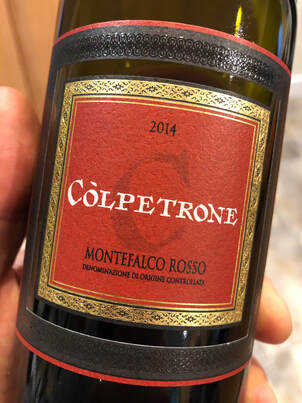
Colpetrone Montefalco Rosso
One of my tasting associates sent a picture this week of a bottle she was enjoying at home - it was Colpetrone Montefalco Sagrantino DOCG, which is a deep rich, tannic red wine from Umbria; vintage 2011. The remarks came back about how good it was and how it was just settling down with respect to the tannin level and the intensity of the wine. Underlying this though was an elevated level of acidity and ripe fruit - even at 9 years of age. This is what I would expect from this wine, though.

Sagrantino is a grape that is in all likelihood indigenous to Umbria, or at least central Italy. For many years it was used to produce grapes that were dried to produce rich, sweet wines of the recioto style. For the past 25-30 years though, much more attention has been on this great grape for dry wines, mainly due to a few producers elevating it to a style that competes with some of the best Italy has to offer. From Umbria, this grape produces wines with extraordinary tannin AND acid - not a typical combination. The tannins in the grape are so high that few other grapes can match it - think antioxidant powers. Early budding, early flowering, and late harvest all equate to a grape with intense color, aromas and flavors - and long aging potential. All of this makes for beautiful wines that have lasting power, often only beginning to show their best at 10 years or more.

Intrigued, I knew I had a bottle of Colpetrone in the cellar, but mine was of the Montefalco Rosso DOC, 2014 (now known as Rosso di Montefalco).

What is interesting is that Colpetrone put a Diam 3 cork in this bottling. Even with a year of aging in barrels, that still means this wine is four years at the time of drinking, so it seems weird that a 3 year estimated cork life would be used(?) My wine was in perfect shape though and the cork was not an issue.

The Rosso is built around Sangiovese and Merlot, as well as Sagrantino. This seems to be a fair and generous combination, as the wine is balanced with ripe red fruit aromatics that carry to the palate. The tannins are firm-ish - a little tight, but well on the way to be resolved with the other components. Beautiful red fruit dominates all the way through the wine. Acidity provides a great counter to the tannin and fruit making this a wine to have with food. We enjoyed with roasted root veggies in broth over polenta - YUM!
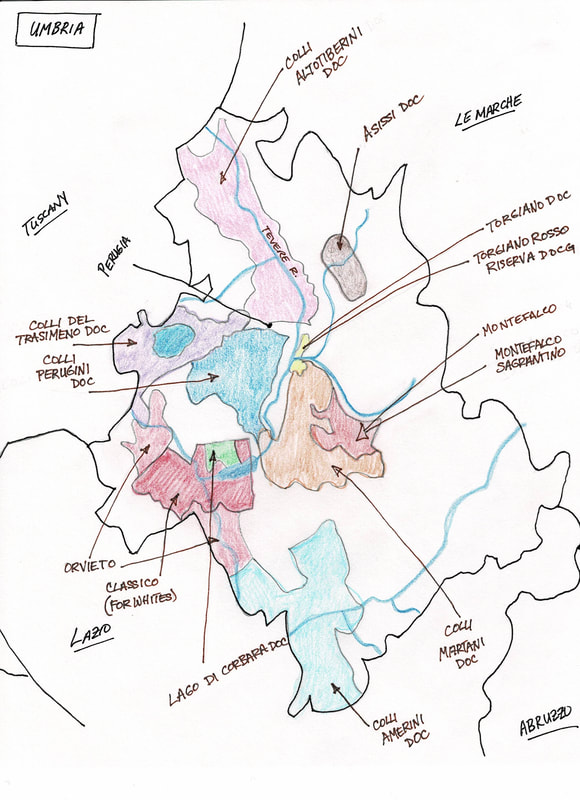


Umbria Wine Map
Map of Umbria wine region - (C) Brian Mitchell 2020
 Umbria is a region that is landlocked. In fact, it is the only region of Italy that does not touch the sea in some way. This means that the climate is slightly more continental, with colder winters and hotter, dryer summers. Some think this is why the Sagrantino grape is perfectly suited to the region, as it does best when left to ripen over a very long season, allowing for super thick skin development that results in high tannins and deep color/flavor components.

Being in close proximity to Rome, Umbria has been both a get-away and resource since antiquity. Lakes and rivers in the mountains provide refuge from "city life", while ample rolling hills and valleys provide places for a diverse range of grape and other agriculture produce that was able to get to the Roman market fairly quickly. I visited the region in 2007, and was enchanted by the rolling hills, quite countryside and tranquility of the region, despite being just and hour or two form Rome. Orvieto is a beautiful Etruscan city with just enough rusticity left to make you feel like you are a few years behind the rest of the world.
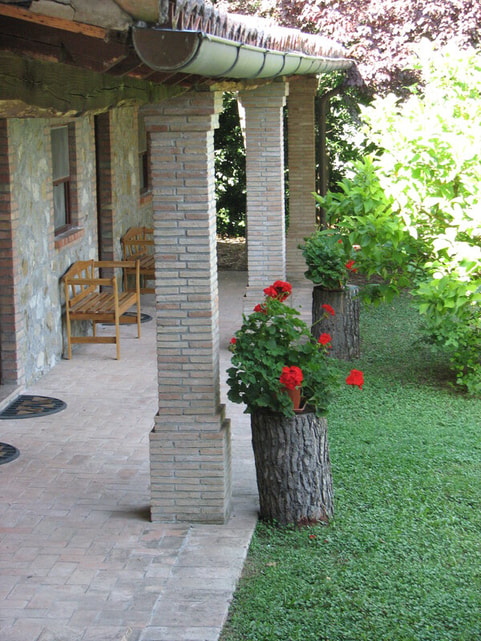
Orvieto, Lago di Corbara, Umbria
Our guest house near Lago di Corbara in Umbria, just outside Orvieto - photo by Brian Mitchell (2007)
Umbria is one of the regions of Italy, at least from a wine perspective, that does not always get a lot of worldwide attention, but makes solid wines. There are a number of key, classic regions and styles to be aware of, and the Sagrantino wines are certainly part of that list. Salute!
4 Comments
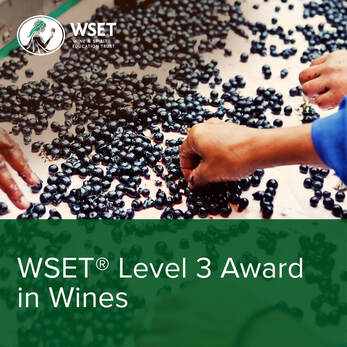
WSET Level 3 Wine Starting April 13th - Registration Closes Today

4/6/2020

0 Comments

 
WSET Level Online Class
Monday April 6th is the last day to register for the April 13th start date for Level 3 Wine Award. Those wishing to participate in this hybrid class should click here for full details and to register for the class. The April 13 start date runs through June 14, and as of now will have an expected exam date of August 1.

The Level 3 Award in Wine is a comprehensive class that looks to devote about 90 hours of study time, and involves the review of wines from around the world.

For a complete list of class dates and description of class details, please click the link to the CLASSES page. For any questions related to this or other offerings, please email [email protected].

0 Comments

Survival Tip to Service #2 - Know the Wine List in Your Restaurant

4/4/2020

0 Comments

 
Wine Education is important for great service
I was conducting a staff training with a group of servers, and I asked them to join in a roll-playing exercise where a manger pretended to be a guest who was looking for help in making a choice of which wine to order.

The "guest" asked the server to make a recommendation on wine pairing for the dish he was panning to order - he wanted something "classic" to have with his selection, and he had the wine list open in front of him. The server thought for a second, leaned over the guest, ran her finger down the page of the wine list and stopped at a certain wine. She then declared that "she-anty" would be a great choice to have with his meal.

What is the problem here? Well. to begin with, this was a server that had worked at that restaurant for nearly 10 years, and over the course of those 10 years, she had not learned the wine list. Had not learned the format of the list, the pricing schemes, and more importantly the selections on the list. There was also a lack of knowledge when it came to wine basics - in this case how to say Chianti, correctly - but also of main grapes, regions, and food and wine basics.

Some of this is of course on the restaurant and their lack of focus on training efforts, but the server had also never really taken any time to learn what was on the menu; there had been a lack of commitment on her part to be fully invested in the job. This had probably worked for her and because regular guests often simply order their regular food and drinks, and she didn't have to do much other than take orders, for the most part.

This only gets you so far, though, and when pressed she had no idea how to make a suggestion that made sense. The guest can read the list can probably read the list as well as she can - and certainly doesn't need a server leaning over them to read the list. And the fact that she could not pronounce a wine's name from the list shows her lack of professionalism.

Here are a few quick Survival Tips to Service for understanding and mastering the wine list in your location:
  1. Read the Wine List - this may sound like a given, but I know hundreds of servers that do not regularly look at the wine list. Newer servers have to look at to go through training, but I know that once through all that - they often are not bothering to read the list. My recommendation - read the list out loud to yourself. If you cannot pronounce a word or name on the list, or you feel like you do not know how to say it correctly - ask for help. A manager, supplier, or even another server will be able to help you.
  2. Look at how the list is organized. Knowing the way the list is set-up can go a long way to making good recommendations. Is the list organized by grape, region, style, price?
  3. Have Go-To wines that you know inside and out. I always suggest having have mastered at least 3-4 whites and reds that you know really well, can describe them without hesitation, and know the broad food pairings that work well with them from the menu. Then add some sparkling, sweet, pink or other types of wines to your wheel-house. Build more from there as you learn.
  4. Taste all of the wines offered by the glass. These will be a significant portion of sales, and knowing these wines will pay dividends over time.
  5. Taste other wines whenever possible - at pre-meal meetings, monthly staff trainings, vendor tastings, or even on your own at a wine shop or at home.
  6. Build your wine vocabulary. Think when you taste and learn the aromas, flavors and texture of the wines. Do these things remind you of the foods on your restaurant's menu? and why?
  7. Work on your own education. If you have a wine on your list that is unfamiliar to you, look it up on the web. Look up the producer, the region and the grapes. Start with the winery website as this will probably have a basic description of the wine and other key info you can build from. Then move to other sites, such as regional sites, sommelier blogs or other places that might mention the wine or similar styles.
  8. Once a month, READ THE WINE LIST AGAIN. Stay up-dated on changes to vintages, styles, additions/subtractions from the selections.

This may seem like a lot, and there are certainly some service personnel that will not get this involved, but in my experience the best service staff take the time to learn the menus and understand what their restaurant has to offer. Knowing the full spectrum of options to guide a guest decision will go a long way to enhancing your ability to bring a top-level guest experience, which will translate to better gratuities.

0 Comments

WSET Class Registration Deadlines Approaching

3/1/2020

0 Comments

 
If you are thinking of taking one of the WSET sessions offered by New England Wine Academy, there are several deadlines to be aware of for the March starting dates.
Picture
 Level 3 Award in Wines
hybrid-online class starting March 16
Deadline to register is Monday March 2 - TODAY!
Click on the link to the left for complete details and class description


Picture
 Level 2 Award in Spirits
hybrid-online class starting March 16
Deadline to register is Monday March 2 - TODAY!
Click on the link to the left for complete details and class description

Picture
 Level 2 Award in Wines
hybrid-online class starting March 23
Deadline to register is Monday March 9, 2020
Click on the link to the left for complete details and class description

0 Comments

Staff Training - Umami and Wine Pairing

3/1/2020

0 Comments

 
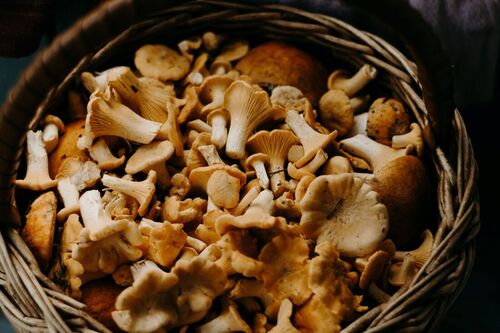
Mushrooms are umami
This Week's Staff Training Focus - Food and Wine Taste Interactions
For those studying food and wine, especially when trying to navigate the rigors of an exam and blind tasting experience such as for WSET training - Umami is a sensation that is not easily digested.

When you place food in your mouth your taste buds adapt so that the perception of the levels of sugar, salt, acidity, etc. in what you taste next can be altered.
An extreme example of this is the unpleasantly acidic taste of orange juice just after you brush your teeth. Similarly, chocolate and thick creamy dishes have mouth-coating effect that can impair the sense of taste.
 
There are two components in food that tend to make wines taste ‘harder’ (more astringent and bitter, more acidic, less sweet and less fruity). These are sweetness and umami.

There are also two components in food that can make a wine taste ‘softer’ (less astringent and bitter, less acidic, sweeter, and more fruity). These are salt and acid.
 
Lets focus on one of these components…UMAMI
 
What is Umami?
Umami is a taste, and is distinct from other primary tastes (sweet, salt, sour, bitter), but is hard to identify sometimes when other components are present – which is often. Umami is essentially the savory side of taste, and is most present in foods that have been aged (parmesan cheese, cured meats, soy sauce), have certain kinds of sodium (MSG), or have earthy flavors (mushrooms, especially when cooked). It is also present in wines that have been aged over time, especially those aged in wood, such as Chianti, Rioja, Ports, and older Cabernet based wines.
 
Umami foods low in salt, such as asparagus, eggs and mushrooms, tend to be a challenge when pairing to wines. Conversely, foods with umami and salt, such as cured or smoked seafood or meats and hard cheeses, tend to work better with wines.
 
Umami...
  • Increases the perception of bitterness, astringency, acidity and the warming effects of the alcohol in the wine.
  • Decreases the perception of body, sweetness and fruitiness in the wine.
 
Generally, food has more impact on the way a wine will taste than the other way around.
  • To pair with umami and salt dishes, stick with wines higher in tannins, such as Barolo with mushroom risotto and shaved Grana Padano cheese.
  • Stay away from low-tannin reds or whites aged in oak, as these will become surprisingly bitter when consumed with umami-rich foods.
 
As an example of how this interaction and perception can work in different ways: I remember a dish I once had that was an omelet filled with smoked salmon and brie cheese – which we enjoyed with a bottle of Chianti Classico. Not the first thing you may think to drink with that dish, but the pairing worked incredibly well. The dish, which had three umami rich components, was able to off-set the tannin in the wine and allow the fruit to come out. It was such a good pairing, I still remember the experience 25 years later.


0 Comments
Forward>>

    RSS Feed

    ABOUT THE Author

    Brian Mitchell runs The New England Wine Academy, and is responsible for the content of this blog. With 30 years of drinks industry experience, Brian has learned a few things, but everyday he is learning more. This blog helps to bring that knowledge to you.

    Archives

    June 2025
    March 2025
    January 2025
    December 2024
    October 2024
    September 2024
    July 2024
    April 2024
    February 2024
    January 2024
    December 2023
    November 2023
    August 2023
    April 2023
    November 2022
    October 2022
    August 2022
    July 2022
    May 2022
    March 2022
    December 2021
    August 2021
    July 2021
    April 2021
    March 2021
    February 2021
    January 2021
    December 2020
    November 2020
    September 2020
    August 2020
    July 2020
    June 2020
    April 2020
    March 2020
    February 2020
    January 2020
    October 2019
    June 2019
    May 2019
    April 2019

    Categories

    All
    5 Questions
    Advanced Wine Tasting
    Barolo
    Beer
    Brainscape
    Brunello Di Montalcino
    Burgundy
    Cabernet Sauvignon
    California
    Carignan
    Chardonnay
    Chenin Blanc
    CMS
    Cocktails
    Condiments
    Coupons
    Distillation
    Education
    Fortified Wines
    From My Cellar
    Gamay
    Golf
    Grenache
    Holiday Sale
    Irish Whiskey
    Italy
    Maps
    Mendocino
    Mourvedre
    Napa
    Online Learning
    Oregon Wines
    Pinot Noir
    Poppincorks
    Port
    Romania
    Sabrage
    Sagrantino
    Sangiovese
    Sauvignon Blanc
    Scotch
    Semillon
    Sherry
    South Africa
    Sparkling Wine
    Survival Tips To Service
    Syrah
    Theory
    Tuscany
    Umbria
    Vinification
    Virtual Courses
    Viticulture
    Whiskey
    Whiskey/Whisky
    Willamette Valley
    Wine 101
    Wine Education
    Wine & Food
    Wine Gadgets
    Wine Of The Week
    Wine Tasting
    WSET
    WSET Level 1 Spirits
    WSET Level 1 Wine
    WSET Level 2 Spirits
    WSET Level 2 Wine
    WSET Level 3 Wine

Class Registration Page
For Hire Events - Bring the Tasting to You!
​FAQs
​Contact
​                                  
Privacy Policy
Terms of Use
Registration, Shipping & Cancellation
​Access, Diversity, Equity & Compliance
Picture
Copyright 2018 > 2026 by New England Wine Academy, LLC  ​
​we advocate making responsible decisions
  • Classes
    • ACADEMY CLASSES
    • WSET L1 BEER
    • WSET L1 SAKE
    • WSET L1 WINE
    • WSET L2 WINE
    • WSET L3 WINE
    • WSET L1 SPIRITS
    • WSET L2 SPIRITS
    • LEVEL 3 SPIRITS
  • Shop
  • Resources
    • STUDY RESOURCES >
      • FLASH CARDS FOR STUDY
      • Video Library
      • Wine Vocabulary
    • STAFF TRAINING RESOURCES
    • BEVERAGE PROGRAM MANAGEMENT
    • WSET Wine Suggestions
    • Our Library >
      • Wine Books
      • Viti / Vini
      • SPIRITS, COCKTAILS AND BARTENDING BOOKS
      • BEER BOOKS
      • SAKE BOOKS
      • DRINKS BUSINESS, HOSPITALITY & SERVICE BOOKS
  • NEWA Bulletin
  • Member Portal
    • WSET Student Resources >
      • WSET L1 Spirits
      • WSET L2 Spirits
      • WSET L3 Spirits
      • WSET L1 Wine
      • WSET L2 Wine
      • WSET L3 Wine
      • WSET EXAMS
    • Opici - RNDC
    • Maison Ferrand
    • Murphy Distributors
    • ASG
    • USBG/CT Industry
    • PRO - S&L
    • AIC
    • Eder-Goodman
  • About
    • Brian Mitchell
    • Associate Educators
    • WSET
    • Location
    • Testimonials
    • For Hire >
      • Corporate Tastings
      • Private Tastings
  • Contact
  • The Policy Page